
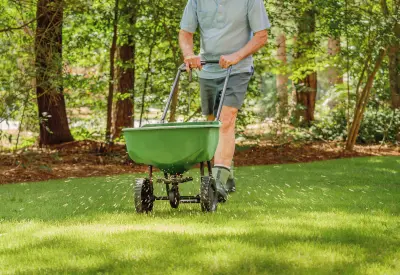
Key Takeaways
- Many Florida soils are already rich in phosphorus. A zero-phosphorus blend (like 15-0-15) is often the safest and most effective choice.
- Heavy Florida rains can easily wash away nutrients. Slow-release formulas prevent runoff and feed your grass steadily.
- Fertilize two to four times a year, but be mindful of local summer fertilizer bans (usually June through September) designed to protect Florida waterways.
- St. Augustine, Zoysia, and Bahia grasses all have different nitrogen requirements to look their best.
When it comes to keeping your yard green and vibrant, there is no one-size-fits-all formula. However, the most effective choice is typically a slow-release, high-nitrogen, and high-potassium blend with zero phosphorus (such as a 15-0-15 ratio). However, the true “best” option depends on a professional soil test and your specific grass type.
Florida’s unique sandy soil, intense heat, and heavy rainy seasons mean that your yard has very specific nutritional needs. If you want a lush, thriving landscape, you need the best lawn fertilizer specifically for Florida conditions.
What to Look for in a Florida Lawn Fertilizer
When you narrow down your options to find the best fertilizer for Florida lawns, keep an eye out for these three critical factors:
- N-P-K Ratio (Nitrogen, Phosphorus, Potassium): Fertilizers are labeled with three numbers showing the percentage of these essential nutrients. While a balanced mix like 10-10-10 or 20-20-20 is a common starting point in other states, Jacksonville FL lawns often require a different approach. Because Florida soil is typically naturally rich in phosphorus (and many counties restrict its use), a zero-phosphorus blend (such as 15-0-15) is frequently the best grass fertilizer for Florida.
- Slow-Release Fertilizer: Slow-release or controlled-release fertilizers deliver nutrients gradually, feeding your lawn over a sustained period. Because our sandy soils drain so quickly, these fertilizers are perfect for promoting steady growth and reducing nutrient runoff into local waterways.
- Season-Specific Formulas: Different seasons mean different needs for your lawn. Look for spring and fall formulations that target what your grass needs during those peak growing periods before the intense heat of summer or the cooler winter dormancy sets in.
Florida Grass Types & Fertilizer Needs
To help you find the best fertilizer for Florida grass, it helps to know what’s growing in your yard. Here is a quick breakdown of common local grasses and their general needs:
| Grass Type | Fertilizer Needs & Characteristics |
| St. Augustine | Requires moderate to high nitrogen. Responds incredibly well to slow-release formulas to maintain its thick, dense, dark-green appearance. |
| Zoysia | Requires less nitrogen than St. Augustine. Too much nitrogen can cause unhealthy thatch buildup. Needs a great balance of potassium. |
| Bahia | A low-maintenance, drought-tolerant grass. Needs very little fertilizer (usually just 1-2 times a year) to thrive. |
| Centipede | Very sensitive to high nitrogen. Requires a specialized, low-nitrogen Florida fertilizer blend to avoid yellowing and disease. |
Florida Lawn Fertilizer Timing Schedule
Timing your applications correctly is just as important as the product you choose. Here is a baseline schedule for Jacksonville FL lawns:
| Season | Timing Schedule & Best Practices |
| Spring (March – May) | Apply your first round of fertilizer after the final chance of unexpected cooler weather has passed. Focus on root strengthening and steady green-up. |
| Summer (June – Sept) | Caution: Many Jacksonville FL and Florida counties have strict fertilizer blackout dates during these months to prevent runoff into oceans and lakes. Focus on iron easily absorbed by grass, rather than nitrogen, to maintain color. |
| Fall (Oct – Nov) | Apply a final dose of potassium-rich fertilizer to help your lawn store food, build strong roots, and prepare for winter dormancy. |
| Winter (Dec – Feb) | Growth slows down. Do not fertilize, as the grass cannot absorb the nutrients efficiently, leading to wasted product and potential chemical burn. |


